|
 |
 |
 |
|
"I began my career, as an undergraduate, in 1969 when a psychology professor announced that a crisis intervention center was being started in East Lansing, Michigan. At the time I was an undergrad majoring in engineering and mathematics. The crisis center would be the 2nd in the nation to open and was to be molded in the image of the San Francisco Suicide Prevention Center. The Listening Ear was launched by the original volunteers and I joined soon after. It eventually had over 170 volunteers. I was one of the directors for several years and one of the crisis intervention and empathy skills trainers -- our training consisted of a 70-hour program for learning empathy skills as well as strategies for handling 'bad trips,' suicide threats, depression, problem pregnancy concerns, and so on. During the four years of working at the center, I became increasingly intrigued with what mental health treatment was all about. As it was the late 60's, the 'personal growth' movement was in full bloom and I was very fortunate to have dozens of opportunities to attend marathon treatment groups, encounter groups, personal growth marathons and groups of all types (e.g., George Bach, William Schutz, Seymor Carter, Esalen staff, MSU psychology staff: Dozier Thornton, Bill Kell, Jerome Kagan, etc.). [I'm sorry such activities are so rare nowadays; clinicians in training after the mid-seventies have no idea of how much learning was to be found in such activities that would shape their personalities, careers, and improve their clinical skills.] With so much exposure and excitement of this type, I shifted my studies and graduated with majors majors -- psychology, anthropology, linguistics, and a minor in history. Concurrent with my matriculation I held employment as a youth outreach worker and later as the evening director of a camp for adjudicated 'delinquent' adolescents, and continued to coordinate the crisis center. By the time I entered graduate school at the University of Michigan in the Clinical Social Work program, I had begun an intensive post-grad training program in Gestalt Therapy and also contracted to endure several years of training to obtain Clinical Membership in the Transactional Analysis Association (with Dr. Stan Woolams, MD). I continued each of these pursuits during grad school and found U. of M. especially responsive to helping develop my interests and the direction they were leading me. Following graduate school, I began working at Family Services and Children's Aid in Jackson, Michigan -- as the clinical director, Lloyd Demcoe, MSW, was impeccable, intelligent, and wise. During this period, I also became a trainer for Huron Valley Institute in Dexter, Michigan where I began teaching and training. During these years I taught Gestalt Therapy, and TA and was able to acquire further training in areas including Gestalt Therapy (Betty Dickenson, Bob Goulding, Erv and Miriam Polster, John Pierrakos), body therapies (Al Lowen, John Bellis, Joe Cassium, and received Rolfing), cognitive therapies (Albert Ellis, Aaron Beck, Arnold Lazarus), new-identity therapy (Dan Cassriel), psychodrama (Jacobs, Moreno), Synergy (Illana Rubenfeld), Transactional Analysis (Bob and Mary Goulding, Steve Karpman, Jaqui Schiff, Charles Alias, Jim McKenna, Paul Ware, Richard Erskine, Fanita English, Jerry and Terry White, and others. ). I published in a few of these areas during that time, began a private training and clinical practice and got to meet and talk to many influential therapists and philosophers around the US, including Gregory Bateson, Erik Fromm, Erika Fromm, Bruno Bettelheim, and others. I brought John Grinder out of California for (what I believe was) the first time and hired him teach my training group in Jackson, MI. We became friends and I assisted in the modeling and early development of what later become known as NLP. Of course, I wrote the first book to use the name NLP when I completed Practical Magic in 1978 (published in 1980). Prior to that, in 1975 I made my first contact with Milton Erickson, in Phoenix and began my regular contacts with him until Dec. 1979. (He died in March of 1980 before I visited him again). My contact with Erickson continued long after I left Jackson Family Services and Huron Valley Institute. I stopped training in Gestalt, TA, NLP, psychodrama, and body therapy and concentrated on 'figuring out' how Dr. Erickson's approach could be understood and replicated. By this point, my training to professionals had become worldwide and my opportunities also expanded. I had the great fortune to study with and sometimes talk at length with so many other luminaries like Gregory Bateson, Bruno Bettelheim, Virginia Satir, Carl Whitaker, Carl Rogers, Rollo May, Erika Fromm, Paul Waltzlawick, Dick Fisch, Jay Haley, John Weakland, Sal Minuchin, Thomas Szasz, Murry Bowen, R.D. Laing, and Judd Marmor, etc. Sadly, many of these individuals have now passed (Bateson, Bettelheim, Satir, Whitaker, Rogers, May, Fromm, Weakland, Bowen, Laing, Marmour, Haley, Goulding, and Ellis) and am I amazed to have ever had the chance to be with them. These years were wonderful opportunities that can never be recreated due to the death of so many of those great individuals. Yet, each of them helped shape the therapy and content of the training and therapy I've conducted since 1975. Throughout the 1980s and early 1990s I conducted hundreds of clinical trainings including ongoing one-weekend per month, year long, training programs in that were organized in NYC, Boston, Tallahassee, Cincinnati, Ann Arbor, Grand Rapids, Chicago, and Buffalo. Many of the programs lasted 3 to 5 years - most notable was the program in Boston that lasted nearly 6 years. Over those years and the years that followed many of my books became university text books for clinical oriented courses and become professional best sellers for the McMillan and Behavioral Science Book Service book clubs. There was even a semester long college course based on my approach in the 1990s at the Universities of Pittsburgh. In the mid-1990s I began developing a corporate consulting approach using behavioral science principles applied to interface management. Due to the huge success of that training I decreased clinical work for a nearly a decade and brought the principles from communication and change to such corporations as Xerox, IRS, NY State Welfare, NY State Tax and Finance, AMX, USAA, Chubb, and other large organizations in the government, insurance, and financial industries. I relocated to Phoenix, Arizona in 2001 and became the founding and Executive Director of the Phoenix Institute of Ericksonian Therapy (2003-2008) and a served as faculty of the Milton H. Erickson Foundation's Intensive Training programs and taught at Arizona State University Dept. of Interdisciplinary Social Science. I began a five year contract as the Editor-in-Chief of the American Journal of Clinical Hypnosis in April 2005 (for the American Society of Clinical Hypnosis organization) and was re-elected for a second 5-year term beginning in 2010. Having written and taught Ericksonian-related workshops, books, and chapters for three decades, in 2009 my training efforts shifted to promoting interventions for an even more positive psychotherapy and what I call "tools of intention." I continue providing individual, couple, and family therapy in private clinical practice as an Licensed Clinical Social Worker (LCSW) and am, since 2008, secretary of the Arizona Board of Behavioral Health, Social Work Credentialing Committee. Some Notable Places I've Visited that Relate to the History of Psychotherapy and Change In addition to studying with, discussing ideas with, and sometimes teaching with these larger-than-life
therapists, this period of my life availed me another set of fantastic
opportunities.� This part is more
difficult to frame for therapists and especially for the scientifically
minded.� The word is pilgrimages!� Spiritual development is often told as� tales of pilgrimages and I have been blessed
to have had many.� I can only briefly mention
these destinations and the historical depth they each provide for history,
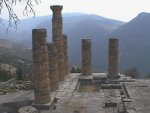
philosophy, religions, and even the history of our healing profession.� The following are descriptions and photos I
took at a few of these
(each more briefly than they deserve, to be sure):
**Please note: For ease of reading I have left the credentials off of all the names on this page. However, each of these individuals, unless otherwise noted, are doctors of psychiatry or psychology and have earned an MD or PhD, or both. My apologies go out to all those listed here who would prefer for his or her degree to have been listed.
|